
Master Logic Skills and Endless Fun With Sudoku Puzzles
Why Sudoku Remains One of the Most Popular Puzzle Games
Sudoku has become one of the most beloved puzzle games in the world. Players of all ages enjoy the challenge of filling a grid with numbers while following a simple set of rules. Despite its straightforward concept, Sudoku offers a deep and rewarding experience that can keep players engaged for hours.
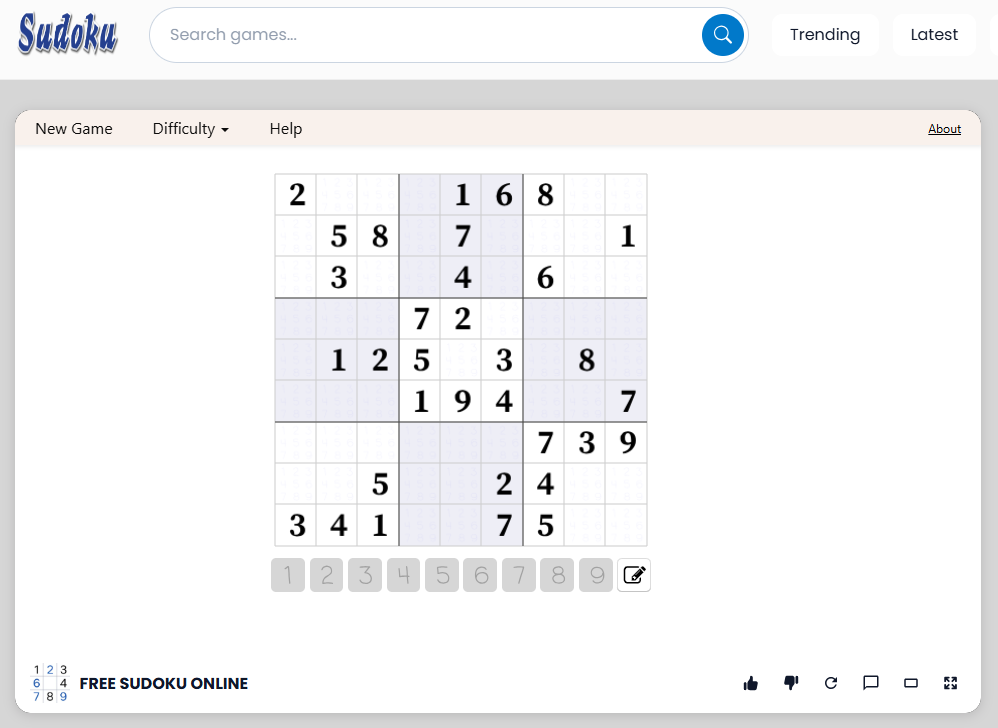
The goal of Sudoku is easy to understand. A standard puzzle consists of a 9x9 grid divided into smaller 3x3 sections. Players must fill every empty space with numbers from 1 to 9. Each row, each column, and each smaller section must contain every number exactly once. This creates a logical challenge that requires concentration, patience, and strategic thinking.
One reason behind the lasting popularity of Sudoku is accessibility. New players can learn the rules in just a few minutes, while experienced players can spend years mastering advanced solving techniques. This balance between simplicity and depth makes Sudoku appealing to a wide audience.
The History and Growth of Sudoku
Early Origins of Number Puzzles
The foundations of Sudoku can be traced back to mathematical puzzles that appeared many years ago. Variations of number-placement games existed before the modern version became widely recognized. These puzzles focused on logic rather than arithmetic, which made them unique among traditional number games.
As puzzle enthusiasts continued experimenting with different formats, the structure that would later become Sudoku gradually emerged. The puzzle gained attention because it challenged reasoning skills without requiring advanced mathematical knowledge.
Global Popularity and Digital Expansion
The worldwide rise of Sudoku accelerated when newspapers and magazines began publishing daily puzzles. Readers quickly became fascinated by the logical challenge. As interest grew, Sudoku expanded into books, mobile applications, websites, and gaming platforms.
Today, millions of people play Sudoku on smartphones, tablets, and computers. Digital versions provide instant access to puzzles of varying difficulty levels, allowing players to enjoy the game anytime and anywhere.
How Sudoku Improves Mental Skills
Strengthening Logical Thinking
Sudoku encourages players to analyze patterns and evaluate possibilities. Every move requires careful consideration because placing an incorrect number can affect multiple areas of the grid. This process strengthens logical reasoning and promotes structured problem-solving habits.
Regular practice helps players become more efficient at recognizing patterns and making informed decisions. These skills can also support critical thinking in everyday situations.
Enhancing Concentration and Focus
A successful Sudoku session demands attention to detail. Players must keep track of existing numbers while considering future placements. This level of focus helps train the brain to maintain concentration for extended periods.
Many people enjoy Sudoku as a way to disconnect from distractions and engage in a mentally stimulating activity. The puzzle creates a sense of immersion that encourages sustained attention.
Supporting Memory Development
While solving Sudoku, players often remember potential placements and mentally track multiple possibilities. This process exercises working memory and encourages active information management.
Consistent engagement with logical puzzles can help maintain cognitive sharpness. Although Sudoku is not a substitute for professional cognitive training, it offers a fun way to keep the mind active.
Strategies for Solving Sudoku Efficiently
Start With Obvious Numbers
Beginners often benefit from identifying rows, columns, or sections that already contain many numbers. These areas provide useful clues because fewer possibilities remain for empty spaces.
Filling obvious positions first creates a stronger foundation for solving the rest of the puzzle. This approach reduces complexity and helps reveal additional opportunities.
Eliminate Possibilities Systematically
One of the most effective Sudoku techniques involves eliminating impossible options. By examining numbers already present in a row, column, or section, players can narrow down the remaining choices.
This process requires patience and careful observation. Over time, players become faster at identifying restrictions and recognizing valid placements.
Use Advanced Logical Techniques
More difficult Sudoku puzzles often require advanced strategies. Techniques such as candidate analysis, hidden pairs, naked pairs, and pattern recognition can help uncover solutions when obvious moves are unavailable.
Experienced players often rely on these methods to solve expert-level challenges. Learning advanced techniques adds another layer of depth and enjoyment to the Sudoku experience.
Different Types of Sudoku Puzzles
Classic Sudoku
Classic Sudoku remains the most widely played variation. The traditional 9x9 format offers a balanced challenge that appeals to both beginners and experts. Difficulty levels typically range from easy to extreme, allowing players to choose puzzles that match their skill level.
Mini Sudoku
Mini Sudoku features smaller grids, making puzzles quicker to complete. These versions are ideal for short gaming sessions or for newcomers who want to learn the fundamentals before tackling larger challenges.
Variant Sudoku Formats
Creative puzzle designers have introduced many Sudoku variations. Some include diagonal restrictions, irregular grid shapes, additional regions, or unique placement rules. These formats maintain the core logic of Sudoku while introducing fresh challenges.
Variant puzzles keep the experience exciting for long-term players who seek new ways to test their skills.
Why Sudoku Is Perfect for Daily Practice
Many people incorporate Sudoku into their daily routine. A single puzzle can provide a productive mental workout without requiring a significant time commitment. Morning sessions can help stimulate the mind, while evening puzzles offer a relaxing way to unwind.
The gradual progression from easier puzzles to more challenging ones creates a satisfying sense of achievement. Each completed grid reinforces logical thinking and encourages continued improvement.
Digital platforms have made daily practice even more convenient. Players can access unlimited puzzles, track progress, and explore different difficulty levels from a single device. This accessibility contributes to the ongoing popularity of Sudoku around the world.
The Lasting Appeal of Sudoku
Sudoku continues to attract millions of players because it combines simplicity, challenge, and mental stimulation. The rules are easy to learn, yet the possibilities within each puzzle remain endlessly fascinating. Every completed grid delivers a sense of accomplishment that motivates players to tackle the next challenge.
Whether played casually during a break or pursued as a serious hobby, Sudoku offers valuable benefits for concentration, logical reasoning, and cognitive engagement. The game remains a timeless puzzle experience that continues to entertain and challenge new generations of players. For anyone seeking a rewarding mental exercise, Sudoku stands as one of the finest puzzle games available today.